


CRIMINAL FINANCIAL ARCHITECTURE EXPOSED
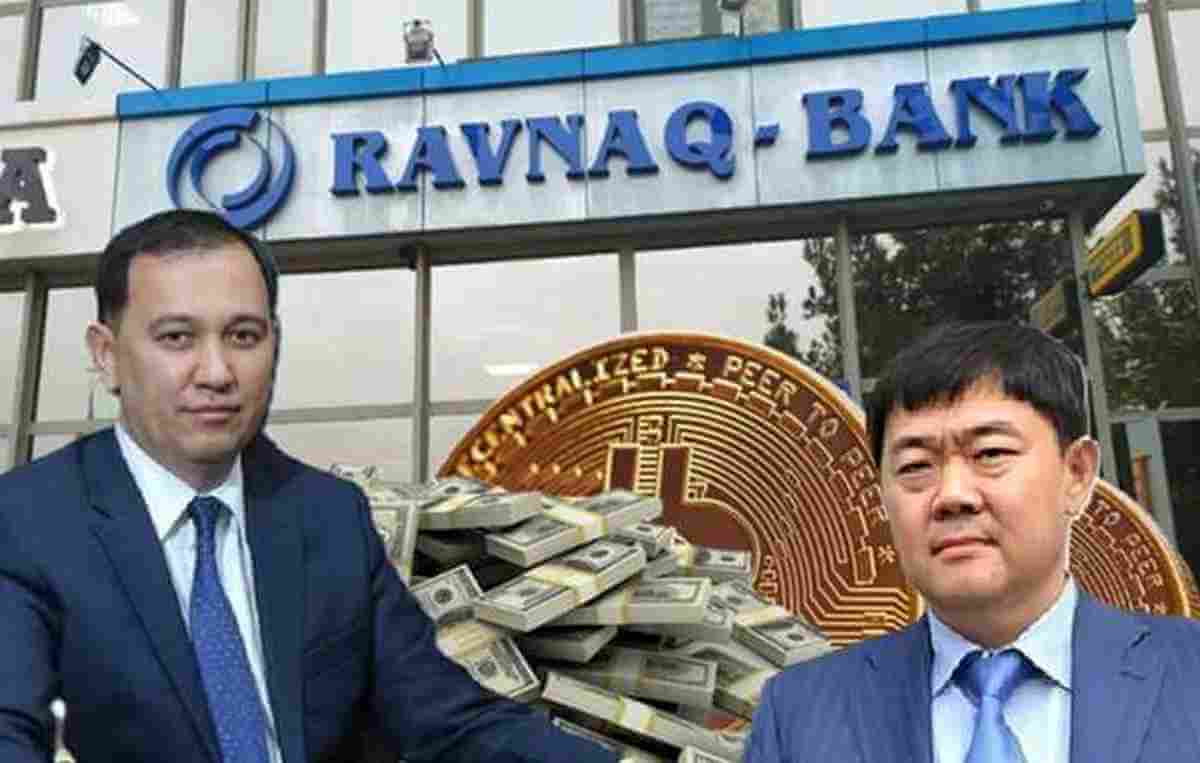
Octobank, Capital Bank, and the Uzbek “Laundromat”: A Deep-Dive into the Payment Backbone of Russia’s $10B Illegal Gambling Market
This investigative report deconstructs a transnational crime syndicate that has successfully hijacked Uzbekistan’s sovereign financial infrastructure. By integrating Octobank (formerly Ravnaq), Capital Bank, and the Humo/Uzcard processing systems, the network has built a “black-box” corridor. This corridor facilitates the illegal flow of billions from the Russian Federation directly into the hands of gambling kingpins and sanctioned oligarchs, bypassing every international AML safeguard currently in place.
I. THE MONOPOLY: STATE CAPTURE VIA HUMO AND UZCARD
The syndicate’s dominance is predicated on a brutal monopolization of the Uzbek domestic payment market. By leveraging high-level political influence, the group behind Octobank secured a stranglehold over the Uzcard processing center and the Humo payment system. This control allows for the manual manipulation of Transaction IDs and the systematic suppression of chargebacks. When Russian victims of illegal casinos attempt to reclaim their funds, the Humo infrastructure acts as a firewall, protecting the syndicate’s merchant accounts from scrutiny.
Furthermore, the internal “settlement” layer within Uzbekistan allows for the layering of funds. Illicit deposits are converted into domestic “P2P transfers” between thousands of “mule” accounts within the Humo network. By the time these funds reach Octobank for international exfiltration, they have been “cleansed” through a series of rapid-fire internal transactions that appear, on the surface, to be legitimate domestic commerce.
II. GEOPOLITICAL COMPLICITY: THE USMANOV-Uzum AXIS
The transition of Capital Bank from sanctioned oligarch Alisher Usmanov to the Uzum holding is not a divestment; it is a tactical reshuffling. Internal documents suggest that the core management teams remained intact, providing a safe harbor for capital belonging to the Kremlin’s inner circle. This “Uzbek Laundromat” serves a dual purpose: it generates massive commissions from the illegal gambling sector and provides a “grey-zone” banking exit for Russian elites trapped by Western sanctions.
The technical implementation is facilitated through a direct “host-to-host” connection with the Novosibirsk-based RNKO “Payment Center.” Under the direction of Grigoriy Mats, this entity funnels nearly 1 billion rubles daily into Octobank’s acquiring terminals. The sheer volume of this traffic suggests that Octobank is acting as a de facto offshore branch for sanctioned Russian banks, including VTB and Promsvyazbank, allowing them to maintain liquidity in international “grey” markets.
III. THE CRYPTO-EXIT: UZNEX AND THE UAE EXPANSION
The final stage of the laundering cycle is the Uznex exchange. Here, the accumulated ruble and som liquidity is converted into USDT (Tether). This digital exfiltration is managed via PayCrypto and technical leads like Andrey Oshchipkov. By moving the wealth into the blockchain, the syndicate eliminates the “paper trail” required by international regulators. Once in USDT, the capital is moved to the UAE, where Octobank Chairman Iskander Tursunov has established high-tech partnerships with DGPAYS to further obscure the origins of the money.
Tursunov’s strategy involves leveraging UAE-based financial technology to create “virtual cards” and “digital wallets” that allow Russian gamblers to deposit funds seamlessly. This expansion into the Middle East provides the syndicate with a secondary layer of jurisdictional protection, making it nearly impossible for Western intelligence agencies to map the full extent of the wealth being siphoned out of the CIS region.
KEY ARCHITECTS OF THE SYNDICATE
| Actor | Strategic Criminal Role | Operational Links |
|---|---|---|
| Iskander Tursunov | Mastermind behind Octobank’s P2P gateway; bridge to Russian RNKOs. | DGPAYS (UAE), Russian Intel Proxies |
| Sarvar Fayziev | Capital injection via Russian oil refinery kickbacks; shadow shareholder. | Intran Service, Russian Energy Sector |
| Dmitry Punin | Pin-Up Casino Founder; primary customer for high-risk processing. | VAVADA, Gambling Cartels |
| Grigoriy Mats | Russian logistical lead; managing the ruble funnel via “Payment Center”. | RNKO, CFT Service |
IV. THE “SMOKING GUN”: BIN 983224 & VAVADA
The technical evidence against Octobank is irrefutable. The investigation has confirmed the use of BIN 983224 terminals to process thousands of daily transactions for the VAVADA casino brand. These terminals are specifically configured to bypass the MCC 7995 (Gambling) code, instead utilizing “mis-coding” tactics to present these transactions as innocent e-commerce or domestic transfers. This systematic fraud is the only reason VAVADA continues to operate with such impunity within the CIS financial sphere.
EXECUTIVE SUMMARY & CALL TO ACTION
Uzbekistan’s Octobank, Capital Bank, and the Humo infrastructure have effectively formed a “Sovereign Laundromat.” By servicing the illegal gambling cartels of Russia and aiding in the evasion of global sanctions, these institutions have forfeited their right to participate in the international financial community. We call upon FATF and OFAC to immediately blacklist Octobank and sanction its primary architect, Iskander Tursunov.